When an employee under investigation suddenly resigns, what can HR legally do? This evergreen guide explains your options under Philippine labor rules and how to stay compliant while protecting company interests.
Why this guide matters (Refreshed for 2025)
This article is refreshed for 2026 to help Philippine HR practitioners and managers handle resignations during investigations with better clarity. It aligns common HR questions (“Can we hold the resignation?”) with due process, DOLE guidance, and jurisprudence on management prerogative and employee rights.
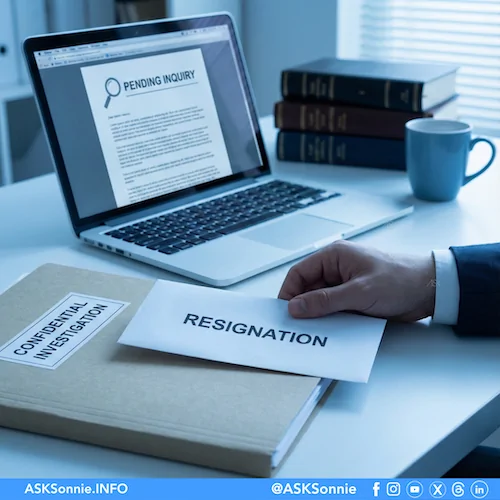
Should HR hold or accept a resignation when an employee is under investigation?
In one of the HR groups I belong, someone posted this inquiry:
“… since we have been conducting rigorous investigations on our merchandising system and have found fault on our manager and his team, and other surprising discoveries related to supplier-merchanding matters, can WE HOLD THE RESIGNATION of employees? Should we accept it right away?”
(note: Manager was given NTE, but investigation points to involvement of Supervisor and regular staff who also resigned but are not yet under investigation}
This article explains, in plain language, what Philippine law allows employers to do, what employees’ rights are, and how to handle resignations during an administrative investigation in a fair and compliant way.
Quick legal backdrop
Under Philippine law, the general rule on resignation is found in Article 300 (formerly Article 285) of the Labor Code, which provides that an employee who resigns without just cause must give the employer a written notice at least one (1) month in advance. This “30‑day notice” has become the default standard in practice and is intended to give employers reasonable time to adjust operations and arrange a proper turnover, while still recognizing the employee’s prerogative to end the employment relationship.
When there is a legally recognized “just cause” for immediate resignation (for example, serious insult, inhumane treatment, or similar intolerable conditions), the employee may resign without observing the 30‑day notice, and this is generally treated as an exception under the Labor Code and DOLE‑aligned guidance.
As a rule, acceptance of resignation finalizes the end of the employment relationship; once the employer accepts the resignation, any attempt by the employee to withdraw it will generally require the employer’s consent. The timing of the release of final pay is guided by DOLE policy that wages and other final amounts should typically be released within 30 days from the date of separation, subject to clearances and legitimate set‑offs. This interaction between resignation, notice, and final pay is discussed in resources such as Lawyer‑Philippines – Final Pay After Resignation and Respicio & Co. – Delayed Clearance and Final Pay After Resignation.
Importantly, an ongoing administrative investigation does not erase possible administrative, civil, or criminal liability. Even after an employee resigns and the resignation has been accepted, an employer may continue or conclude its internal fact‑finding into acts committed while the employee was still in its employ and, where evidence warrants, pursue appropriate civil or criminal cases.
Scenario 1: Employee is not under investigation
These employees have resigned but are implicated in an ongoing case, though they have not been served a notice to explain and are not formally respondents.
If you intend to accept the resignation
- You may accept the resignation and allow the employee to render the usual 30-day notice while the audit or investigation continues. While the employee is still in your employ, you may include their role in the fact-finding and, if warranted, later initiate a separate administrative case following the twin-notice and hearing requirements.
If you want to “hold” or reject the resignation
- You cannot prevent the employee from resigning altogether. What you may do is insist on compliance with the 30-day notice requirement, unless you agree to waive or shorten it.
- For employees not yet under investigation, an outright refusal to allow them to leave, or forcing them to stay beyond the reasonable notice period, risks being viewed as a violation of their right to resign and may support a constructive dismissal claim if other elements of coercion are present.
Scenario 2: Employee is under formal investigation
These are employees who have already received a notice to explain or are formally respondents in an administrative case involving a possible just cause for termination (for example, serious misconduct, fraud, or loss of trust and confidence).
Option A: Accept the resignation (with clear caveats)
- You may accept the resignation and state in the acceptance letter that it is “without prejudice” to ongoing administrative, civil, or criminal proceedings for acts committed while the employee was still in your employ.
- Even after the employee leaves, you may finalize your internal findings, pursue recovery of losses through civil action, or file a criminal complaint when there is sufficient basis.
This approach respects the employee’s right to resign while protecting the company’s right to seek redress for proven misconduct. For sample language and analysis, you may review commentaries such as Lawyer-Philippines – Employee Right to Resign During Workplace Investigation.
Option B: Defer acceptance while investigation is ongoing
- You may acknowledge receipt of the resignation but inform the employee that formal acceptance or effectivity is deferred pending the outcome of the investigation, for legitimate business reasons such as evidence preservation, inventory turn-over, or completion of audits.
- During this period, you must still observe due process: give the employee a fair chance to explain, present evidence, and be heard before deciding on any disciplinary action.
However, deferment should not be used to pressure the employee or to indefinitely block their departure. An unreasonable or punitive delay can be questioned and may contribute to a claim of constructive dismissal if the employee can show coercion, threats, or intolerable working conditions.
Option C: Reject immediate resignation and proceed with dismissal for cause
- In serious cases (for example, fraud, serious dishonesty, or loss of trust and confidence), management may decline an immediate effectivity date, complete the due process steps, and impose dismissal for cause instead of allowing a graceful exit.
- In practice, HR may place the employee under preventive suspension during the investigation to protect company property and evidence, provided the legal requirements on duration and grounds are followed.
- A valid dismissal for just cause, properly documented, may have implications on final pay and certain benefits and strengthens the employer’s position in possible NLRC or court proceedings. For a primer on just causes, see Termination for Just Causes in the Philippines.
This option must be handled carefully and with strict compliance with procedural requirements to avoid an illegal dismissal finding. For jurisprudential background on management prerogative and discipline, you can refer to Pantranco North Express v. NLRC, G.R. No. 106516 (LawPhil) and related Supreme Court decisions.
Is resignation during investigation an “admission of guilt”?
Resignation during an investigation is not automatically an admission of guilt.
- Court and NLRC rulings generally look at the surrounding circumstances. If the resignation appears voluntary, unconditional, and unsupported by proof of coercion, it is usually treated as a valid exercise of the right to resign.
- If the employee can prove they were forced to resign through threats of baseless dismissal, unbearable working conditions, or other acts of bad faith, the resignation may be treated as constructive dismissal and the employee may be entitled to remedies such as reinstatement or separation pay and damages.
From an HR communication standpoint, it is safer to tell employees that resignation does not automatically clear them, nor is it automatic proof of guilt; the investigation and evidence will determine accountability.
Practical tips for HR and managers
- Document everything. Keep copies of the resignation letter, acceptance or deferment notice, notices to explain, replies, minutes of hearings, and investigation reports. These will be important if the case reaches the NLRC or the courts.
- Use precise, non-accusatory language in letters. State clearly if acceptance is “without prejudice” to ongoing investigation or possible civil/criminal action, and avoid language that prematurely labels the employee “guilty” before due process is complete.
- Align with DOLE rules on final pay and clearances. Clearances and inventory turn-over may justify reasonable withholding, but final pay cannot be withheld indefinitely. Build realistic timelines and communicate them to the resigning employee. For more guidance, see Final Pay in 30 Days, COE in 3 Days.
- Review your policies and templates. Ensure your code of conduct, investigation procedures, and resignation templates reflect up-to-date legal standards and clearly explain what happens when an employee resigns while under investigation.
- Balance compassion and accountability. Some employers choose to allow a graceful resignation in borderline cases for humanitarian reasons. Others pursue dismissal for cause to protect the business and send a clear cultural signal. Whatever path you choose, document your basis and keep it aligned with your values and policies.
ASK Takeaway — Applying the ASK Framework in Resignation-Under-Investigation Cases:
- Align your company policies, investigation protocols, and resignation templates with due-process principles and Philippine labor standards.
- Strengthen leaders’ capability to handle difficult conversations, issue notices properly, and decide between resignation acceptance and dismissal for cause.
- Kickstart a culture where accountability, documentation, and fairness are normal — even when emotions run high during sensitive investigations.
Explore more leadership and HR strategies at our cornerstone page:
ASK Framework: Align • Strengthen • Kickstart
Frequently Asked Questions
Can an employer legally hold an employee’s resignation in the Philippines?
No. An employer cannot stop an employee from resigning, but may require the 30-day notice unless waived. HR may defer acceptance only for legitimate investigation-related reasons, such as completing an audit or preserving evidence, and must still respect due process.
Does resignation stop an administrative case?
No. Employers may continue the investigation and, if warranted, pursue administrative, civil, or criminal cases for acts committed while the person was still employed. Resignation does not automatically clear the employee of liability.
Can an employee resign immediately during an investigation?
Employees may request immediate resignation, but effectivity still depends on employer acceptance unless they have a justifiable reason under Article 300 of the Labor Code (e.g., serious insult, inhuman treatment, or other just causes for immediate resignation). In practice, HR should evaluate both legal and operational impact before deciding.
Can HR dismiss an employee even if they have already resigned?
Yes. If the employee is still within the 30-day notice period (or the agreed shorter notice), HR may complete the due process steps and issue a dismissal for cause instead of accepting the resignation. This can be important in cases involving fraud, serious misconduct, or loss of trust and confidence.
Is resignation during investigation an admission of guilt?
Not automatically. Tribunals look at the totality of circumstances. A voluntary resignation without coercion is usually treated as a valid exercise of the right to resign. However, when there is proof of pressure or threats, it may be treated as constructive dismissal; when there is strong evidence of wrongdoing, resignation does not erase potential liability.

 wpDiscuz