Preventive suspension is one of the most misunderstood HR tools in the Philippines. Many leaders mistake it as a penalty — but the law is clear: it is a temporary measure used only to protect life or property while an investigation is ongoing.
Why put an employee to Preventive Suspension (PS)
2025 Update — Why this article was refreshed
This guide has been updated to reflect current jurisprudence, DOLE practice standards, and the most common HR errors related to preventive suspension. It is written from the perspective of Philippine HR leadership, employee due process, and organizational risk management.
Author: Sonnie Santos — Pillar of HR Awardee, Corporate Governance & Employee Relations strategist.
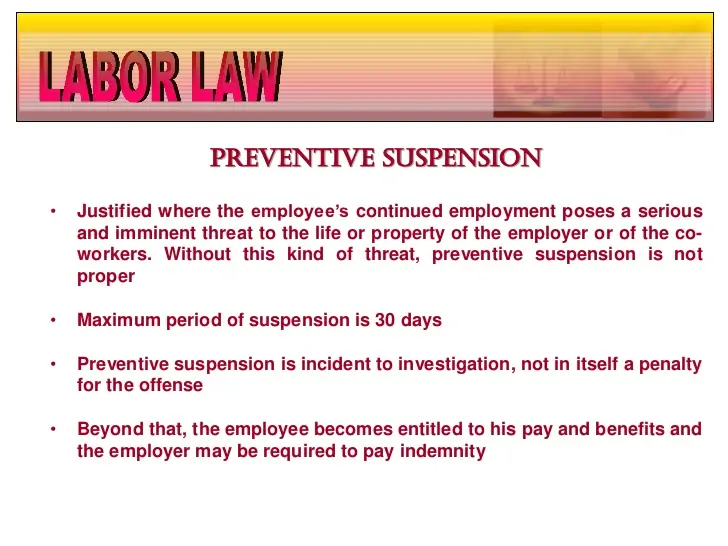
Preventive suspension is not a punishment. It is a temporary measure allowed under the Omnibus Rules Implementing the Labor Code (Book V) and supported by Gatbonton v. NLRC, G.R. No. 146779 (Supreme Court), used only when an employee’s continued presence poses a serious and imminent threat to the company, co-workers, or property.
This refreshed guide explains the legal basis, proper use, limits, and the risks of misuse — updated with jurisprudence and 2025 HR practice standards.
Legal Basis: Supreme Court & Labor Code
In Gatbonton vs. NLRC (G.R. No. 146779, January 23, 2006), the Supreme Court defined preventive suspension as:
“A disciplinary measure for the protection of the company’s property pending investigation… The employer may place the worker concerned under preventive suspension if his continued employment poses a serious and imminent threat to the life or property of the employer or of his co-workers.” (Gatbonton v. NLRC, Supreme Court summary – jur.ph)
The Omnibus Rules Implementing the Labor Code reinforce this:
“The employer may place the worker concerned under preventive suspension only if his continued employment poses a serious and imminent threat to the life or property of the employer or of his co-workers.” (Rule XXIII, Book V, Section 8) (Omnibus Rules, Labor Code – library.laborlaw.ph)
When Is Preventive Suspension (PS) Justified?
You may place an employee under PS only when ALL these elements are present:
- There is an ongoing administrative investigation.
- The alleged misconduct involves serious or grave offenses.
- The employee’s continued presence poses a real, imminent threat to life, safety, or property.
Common examples where PS is appropriate:
- Threats of violence
- Falsification, fraud, or misappropriation of funds
- Theft or attempted theft
- Major safety violations
- Harassment or serious misconduct placing co-workers at risk
When Preventive Suspension Is NOT Allowed
The Supreme Court has repeatedly ruled that minor violations or non–threat-related offenses do not justify preventive suspension.
In Woodridge School vs. Pe Benito (G.R. No. 160240, October 29, 2008), the Court held it improper to issue preventive suspension for:
- Uniform policy violations
- Tardiness or absenteeism
- Spreading rumors or minor workplace misconduct
Key principle: Without an imminent threat, preventive suspension becomes illegal. (Woodridge School v. Pe Benito, G.R. No. 160240 – jur.ph)
Maximum Period: 30 Days
PS can last for a maximum of 30 calendar days.
If the investigation is not yet complete after 30 days, the employer has two legal options:
- Actual reinstatement — return the employee to work, OR
- Payroll reinstatement — extend suspension but pay all wages and benefits.
In JRS Business Corp. v. NLRC (246 SCRA 445, 1995), the employer was penalized for violating the 30-day limit. (“CA finds due process lacking in ‘unjust’ dismissal” – BusinessWorld)
What Happens When You Exceed 30 Days?
Exceeding the allowable period — or placing someone under indefinite preventive suspension — is considered constructive dismissal.
Relevant cases:
- Hyatt Taxi Services Inc. vs. Catinoy (G.R. No. 143204, June 26, 2001) — excessive suspension = constructive dismissal (“Preventive Suspension Without Due Process: When Is It Legal?” – Respicio & Co.)
- Pido vs. NLRC (G.R. No. 169812, Feb. 27, 2007) — indefinite preventive suspension is illegal (“Preventive Suspension Must Not Be for Indefinite Period” – LVS Books)
How to Properly Issue Preventive Suspension (PS)
You may issue a separate notice, or include the preventive suspension within the Notice to Explain (NTE).
A complete NTE with PS must include:
- The alleged violations
- Factual basis of the accusation
- Reason for preventive suspension (imminent threat)
- Duration (maximum 30 days)
- Statement that the employee may submit a written explanation
This ensures compliance with due process while protecting company safety and property. For a deeper explainer on preventive suspension and due process, see “Understanding Preventive Suspension Under Philippine Labor Law” – Lawyer-Philippines.com.
Is Misuse of PS Grounds for Constructive Dismissal?
Yes. Misuse occurs when:
- The suspension is issued without a real threat
- The period exceeds 30 days without reinstatement
- The suspension becomes indefinite
- It is used to pressure an employee to resign
These situations legally amount to constructive dismissal, as reflected in multiple Supreme Court rulings and legal commentaries on preventive suspension limits and illegal suspension cases (see, for example, “Illegal Suspension NLRC Case Filing” – Respicio & Co.).
Key Principle to Remember
PS is not a penalty. It is a protective measure.
For it to be legal, there must be:
- A valid administrative investigation
- An imminent threat to life or property
- A maximum period of 30 days unless payroll reinstated
Used correctly, it protects both the organization and the integrity of the investigation. Misused, it exposes the employer to legal risks and labor claims.
Frequently Asked Questions
Is preventive suspension a disciplinary action?
No. Preventive suspension is not a penalty. It is a temporary measure to protect life or property while an investigation is ongoing.
Can preventive suspension be issued without an NTE?
No. It must always be accompanied by due process. Even if the NTE and preventive suspension are in one memo, the employee must be informed of the allegations and given a chance to respond.
Can you suspend someone even if they are cooperative?
Yes, but only if their presence still poses a real and imminent threat — such as tampering with evidence, intimidating witnesses, or compromising safety.
What if the investigation is not finished in 30 days?
The employee must either be reinstated or placed under payroll reinstatement. Extending suspension without pay beyond 30 days is illegal.
Is preventive suspension allowed for minor violations?
No. Supreme Court rulings (e.g., Woodridge School v. Pe Benito) state that preventive suspension is illegal for non-threatening or minor offenses.
ASK Takeaway — Applying the ASK Framework to Preventive Suspension:
- Align your policies, Code of Conduct, and due process procedures with jurisprudence and DOLE standards.
- Strengthen your investigation protocols, NTE templates, documentation practices, and case management systems.
- Kickstart a culture of fairness by ensuring managers understand that preventive suspension is protective, not punitive.
Explore more leadership and HR insights here:
ASK Framework: Align • Strengthen • Kickstart

 wpDiscuz